Posted May 21, 2026

By Enrique Abeyta
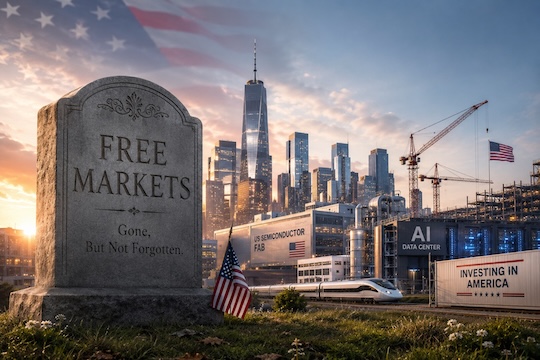
The Death of Laissez-Faire Capitalism
On Monday, I wrapped up our coverage of Trump’s trip to China.
At the center of that meeting was a reality many investors still don’t fully appreciate…
The global economy is no longer being driven purely by free markets. It’s increasingly being driven by national security.
That shift may ultimately become one of the biggest investing stories of the next decade.
Whether you agree with it politically or not, Trump has made one thing crystal clear since returning to office: the old rules no longer apply.
This administration has aggressively challenged long-standing economic norms in ways America has not seen in decades.
Tariffs. Industrial policy. Strategic subsidies. Export controls. Domestic manufacturing mandates. Direct support for critical industries.
And importantly, this is no longer just rhetoric.
We are already seeing the government actively supporting companies in semiconductors, rare earth metals, lithium production, defense infrastructure, energy systems, and strategic manufacturing.
That includes companies like Intel, MP Materials, Lithium Americas, United States Steel Corporation, and Trilogy Metals.
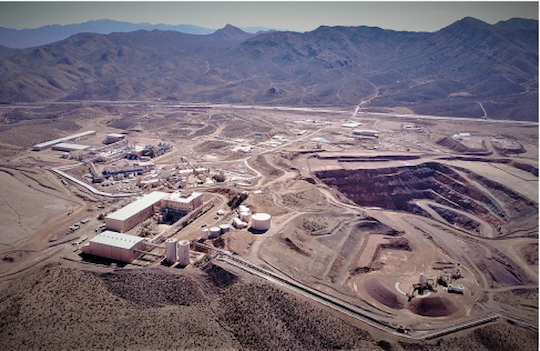
Mountain Pass Rare Earth Mine, San Bernardino, CA. Source: MP Materials
For decades, American capitalism operated largely under the idea that markets should determine winners and losers naturally. The government’s role was supposed to remain limited.
Economists called this laissez-faire capitalism, the belief that free markets allocate capital more efficiently than governments ever could.
But after reading a fascinating recent essay by Porter & Co., I've started wondering whether we are now witnessing the end of that era entirely.
The basic argument is simple.
AI, semiconductors, energy systems, critical minerals, and advanced manufacturing are now considered too important to national security to leave entirely to "market forces."
And when you step back, that actually puts the United States more in line with how other global superpowers already operate.
China openly subsidizes and directs strategic industries. Japan has long supported key industrial champions. South Korea helped build global giants like Samsung and Hyundai through coordinated state support and financing.
For years, America largely resisted this approach.
Now? We may be embracing it at full speed.
And I can’t help but wonder if we’ve only seen the beginning.
The New Manhattan Project
One of the biggest takeaways from the China summit is that it had very little to do with tariffs. It was all about Taiwan.
During the summit, China’s President Xi Jinping reportedly made it abundantly clear that China views reunification with Taiwan as inevitable and non-negotiable.
The language surrounding Taiwan was noticeably sharper and more direct than many investors expected.
And honestly, that should get everyone’s attention.
Because beneath all the political language lies something much bigger — semiconductors. More specifically, Taiwan Semiconductor Manufacturing Company.
TSMC is not just another technology company. It’s arguably the single most strategically important corporation in the entire world economy.
It produces the overwhelming majority of the world’s most advanced semiconductors.
These are the chips powering AI systems, advanced military hardware, autonomous systems, cloud computing, smartphones, data centers, and next-generation weapons platforms.
Without TSMC, the modern AI race slows dramatically. That’s why Taiwan matters so much.
This is not just about geography anymore. It’s about control over the future of computing itself.
And in a winner-takes-all AI world, whoever controls the most advanced chips may ultimately control the future balance of economic and military power.
This is where things start getting really interesting.
If the U.S. truly believes AI is an existential national security priority, and if America views TSMC’s semiconductor dominance as absolutely critical, then what exactly is the spending limit to maintain that advantage?
Seriously. Is there one?
Historically, when the U.S. identifies something as essential to national survival, spending constraints tend to disappear quickly.
The Manhattan Project fundamentally reshaped warfare. The Apollo Program reshaped technology and engineering. The Interstate Highway System reshaped commerce and logistics.
What if AI infrastructure and semiconductor independence become the next version of that? And perhaps more importantly… what if it’s already happening?
TSMC’s Arizona footprint is already expanding aggressively.
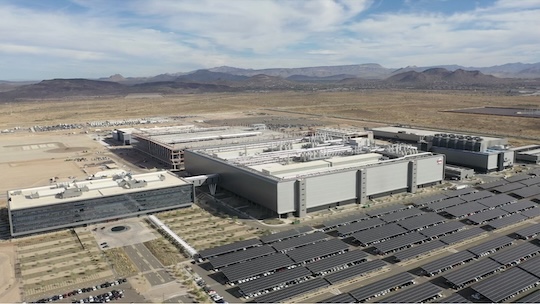
TSMC’s Arizona Campus, Phoenix, AZ. Source: TSMC
The company has committed substantial capital to advanced semiconductor manufacturing in the United States.
Meanwhile, the federal government continues to push incentives for domestic chip production through both direct and indirect support programs.
But what if that accelerates dramatically from here?
What if the Trump administration ultimately pursues a full-scale national mobilization effort around semiconductor manufacturing?
What if Washington effectively decides that America must build the world's dominant AI infrastructure ecosystem entirely on domestic soil, regardless of cost?
That may sound extreme today. But so did many of the administration’s tariff policies just a few years ago.
Now they’ve become mainstream.
Meet “Deal Team Six”
One phrase that keeps bouncing around in my head after this summit is “Deal Team Six.”
If you’re unfamiliar with the term, “Deal Team Six” is the nickname reportedly given to the Pentagon’s Economic Defense Unit, a high-profile task force made up of former Wall Street bankers, private equity executives, and defense specialists tasked with strengthening America’s industrial base.
The mission itself sounds almost surreal if you grew up during the peak of globalization in the 1990s and 2000s.
This team is reportedly empowered to use aggressive financial tools, such as direct equity investments, long-term purchase guarantees, price floors, strategic financing arrangements, and supply chain partnerships, to accelerate critical industries tied to national security.
In other words, this isn’t traditional free-market capitalism anymore.
This is strategic capitalism.
The unit is reportedly led by George Kollitides, the former head of defense investing at Cerberus Capital Management.
They have the capacity to deploy upwards of $200 billion over three years into critical industries tied to semiconductors, defense systems, energy infrastructure, and rare-earth supply chains.
One of the group's earliest reported objectives is to break China's stranglehold on the rare-earth magnets and minerals required for advanced missiles, military electronics, AI systems, and next-generation weapons platforms.
And honestly, when you look at the broader geopolitical picture, the logic becomes pretty obvious.
China wants Taiwan. America wants semiconductor security. And neither side can afford to lose the AI race.
That creates enormous pressure for escalation on both sides.
The most likely outcome may not be military conflict.
It may be an economic arms race unlike anything we’ve seen since the Cold War.
And that could mean much larger industrial buildouts, much larger infrastructure packages, much larger energy investments, much larger semiconductor subsidies, and much larger partnerships between Washington and corporate America.
In other words, the line between government and industry may continue getting blurrier from here.
You Need to Be Paying Attention
For investors, this matters enormously.
Because if this thesis is correct, entire sectors of the market could continue benefiting from long-term government-backed demand cycles for years to come.
Semiconductors. Power infrastructure. Nuclear energy. Cybersecurity. Electrical equipment. Rare earth metals. Domestic mining. Defense technology. Industrial automation. Data center infrastructure.
These may no longer simply be “growth industries.”
They may increasingly become strategic national priorities.
And historically, when Washington fully aligns behind an industry, massive amounts of capital tend to follow.
That doesn’t mean every stock goes up forever. It doesn’t mean valuations won’t matter. And it certainly doesn’t mean geopolitical risks disappear.
In fact, China’s reaction to all of this could become one of the biggest market risks of the next several years.
But it does mean investors should start thinking differently about what type of economy we may be entering.
The old free-market model that dominated the post-Cold War era increasingly appears to be fading.
The world now seems to be shifting toward something far more strategic, nationalistic, and infrastructure-driven.
And as we head into Memorial Day weekend following the conclusion of this historic China summit, those are exactly the kinds of things I find myself thinking about.
Not whether laissez-faire capitalism is weakening — but whether it may already be gone.
Sign Up Today for Free!
Truth & Trends brings you market insights and trading tips you won't find anywhere else — unless you have your own personal hedge fund manager on speed dial...
Meet Enrique Abeyta, one of Wall Street’s most successful hedge fund managers. With years of experience managing billions of dollars and navigating the highs and lows of the financial markets, Enrique delivers unparalleled market insights straight to your inbox.
In Truth & Trends, Enrique shares his personal take on what’s moving the markets, revealing strategies that made him a star in the world of high finance. Whether it’s uncovering the next big trend or breaking down the hottest stocks and sectors, Enrique’s insights are sharp, actionable, and proven to work in any market condition.
Inside these daily updates, you’ll gain:
- 50 years of combined trading wisdom distilled into actionable insights.
- A behind-the-scenes look at how Wall Street pros spot opportunities and avoid pitfalls.
- Exclusive strategies that Enrique personally uses to deliver exceptional returns — no fluff, just results.
To have Truth & Trends sent directly to your inbox every weekday, just enter your email address below to join this exclusive community of informed traders.
Don’t miss your chance to learn from one of the best in the business.
Sign up now and take your trading game to the next level.

Welcome to the Dark Side of the Moon
Posted May 20, 2026
By Nick Riso

Trump Meets Xi for “Crisis Summit” 2026
Posted May 18, 2026
By Enrique Abeyta

3 Tickers to Watch as the Semi Trade Unwinds
Posted May 15, 2026
By Greg Guenthner
The $16 Trillion China Summit
Posted May 14, 2026
By Enrique Abeyta

The Tell-Tape Heart
Posted May 13, 2026
By Nick Riso