Posted June 29, 2026

By Enrique Abeyta
The AI Arms Race Just Got Literal
We tend to think of AI as something that lives inside a computer. But that's about to change.
A new category is emerging that experts call Physical AI.
These are systems capable of perceiving the world around them, avoiding obstacles, and making real-time decisions with little or no human input.
It's already showing up in autonomous vehicles and humanoid robots. But nowhere is it developing faster or with higher stakes than in military drones.
I've covered the drone theme here at Truth & Trends a few times over the past week. And there's a good reason for that.
The more time I spend digging into the drone story, the more convinced I become that we're watching something bigger than a defense trend.
The Pentagon is pouring tens of billions of dollars into autonomous warfare — $54.6 billion requested for fiscal year 2027 alone.
So what started as an AI arms race over chips and software has become something far more literal.
I want to keep pulling on this thread, because I think the most interesting part of the story is still ahead.
Today, I’ll introduce you to a company that sits right at the intersection of AI and autonomous drones.
Full disclosure: it isn't publicly traded yet.
But understanding what it's building will help clarify exactly where this technology is headed and which publicly traded companies are best positioned to benefit when it gets there.
The Company Behind the Future of Drones
If you've never heard of Skydio, you're not alone.
Founded in 2014 by three MIT graduates and headquartered in San Mateo, California, the company has quietly become one of America's leading developers of autonomous drones.
Unlike many drone manufacturers that built their business around aerial photography or recreational flying, Skydio has focused on enterprise customers, public safety agencies, and the U.S. military.
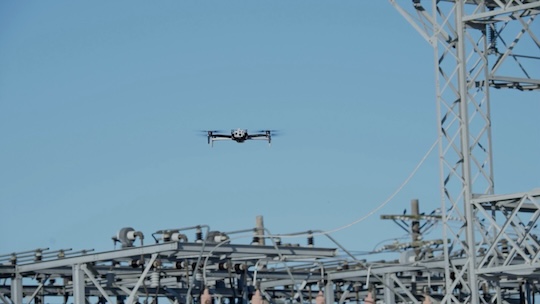 X-10 Drone Inspecting Infrastructure in Texas. Source: Skydio
Today, its drones are used by police departments, fire departments, utility companies, construction firms, transportation agencies, and every branch of the U.S. military.
Their drones inspect bridges, map construction sites, patrol critical infrastructure, and assist first responders.
And increasingly, they support military reconnaissance and national security missions.
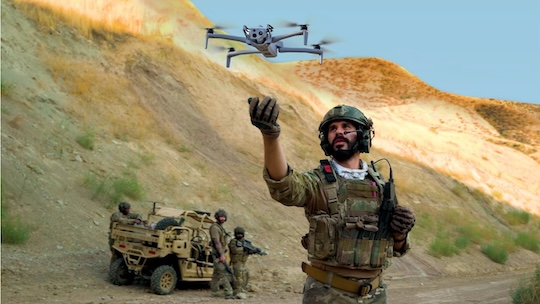 X-10 Drone for Military Use. Source: Skydio
The company has even secured major contracts with the U.S. Army, including one of the largest domestic tactical drone procurements in recent history.
What's particularly interesting isn't simply that Skydio builds drones. It's how those drones operate.
Rather than relying entirely on a human pilot, Skydio's aircraft use advanced computer vision and artificial intelligence to understand the world around them in real time.
The drone constantly analyzes its surroundings, identifies obstacles, chooses safe flight paths, and continues its mission even in environments where GPS signals are weak or unavailable.
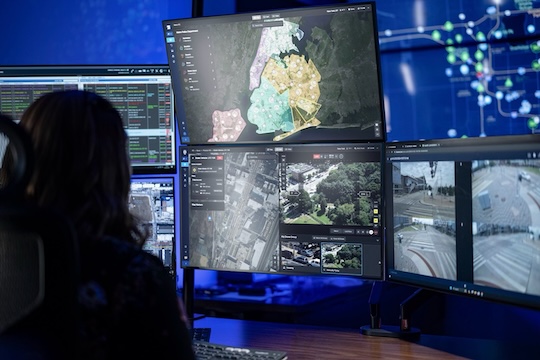 Remote Operations Command Center. Source: Skydio
In many ways, it's less like flying a remote-controlled aircraft and more like supervising an autonomous teammate.
That capability fits remarkably well with the Pentagon's long-term vision for autonomous warfare.
Now, this is where the investment story gets interesting.
The military doesn't simply need thousands of drones.
It needs drones that require fewer operators, fewer training hours, less direct supervision, and greater reliability.
It also needs drones with the ability to function in environments where communications may be disrupted or unavailable.
AI helps solve many of those problems.
Instead of a single operator controlling a single aircraft, future systems could allow a single operator to supervise multiple autonomous drones simultaneously.
That dramatically changes the economics of military operations. It also explains why software is becoming just as important as hardware.
Instead of a single operator controlling a single aircraft, future systems could allow a single operator to supervise multiple autonomous drones simultaneously.
It's worth pausing on what that actually requires.
Buying thousands of drones is a manufacturing challenge. Coordinating thousands of autonomous drones across a battlefield is an AI challenge.
That distinction explains why software is becoming just as important as hardware.
And it showcases why the companies building the smartest systems may ultimately matter more than the companies building the most of them.
There's one catch. As I mentioned earlier, Skydio isn't publicly traded. So you can’t yet buy the company’s shares.
But I wanted to tell you about the company because it’s tied to what I see as a major trend in the market.
Companies like Skydio provide an important glimpse into where Washington appears to be directing tens of billions of dollars in future defense spending.
They help us understand which technologies military planners believe will matter most over the coming decade.
That knowledge can become incredibly valuable when evaluating publicly traded companies operating throughout the same ecosystem.
And there are quite a few, which I may cover in the future if you’re interested. (Drop me a line and let me know!)
For now, I want to leave you with this…
The Next Great AI Boom
Think back to 20 years ago when cybersecurity was considered a niche industry.
Then fast forward to today, and virtually every government agency, Fortune 500 company, hospital, bank, airport, and utility considers cybersecurity essential.
I can't help but wonder whether autonomous drones are following a similar path.
As drone technology matures, we’re likely to see it around in more places. Military bases, ports, airports, power plants, pipelines, factories, you name it.
These critical pieces of infrastructure will rely on autonomous aircraft in one way or another, whether it’s for surveillance, inspection, mapping, or security.
And in many cases, those drones won't simply follow commands. They'll make intelligent decisions on their own.
That doesn't mean humans disappear from the equation. Far from it.
But it does mean the role of AI will continue expanding beyond our computers and smartphones into machines that can physically interact with the world around us.
That's a profound shift.
AI has already changed how we work. The next wave of AI may change how nations defend themselves.
That's why I'm so interested in this area right now — and why you should be paying attention too.
I suspect this story is only just beginning.
Sign Up Today for Free!
Truth & Trends brings you market insights and trading tips you won't find anywhere else — unless you have your own personal hedge fund manager on speed dial...
Meet Enrique Abeyta, one of Wall Street’s most successful hedge fund managers. With years of experience managing billions of dollars and navigating the highs and lows of the financial markets, Enrique delivers unparalleled market insights straight to your inbox.
In Truth & Trends, Enrique shares his personal take on what’s moving the markets, revealing strategies that made him a star in the world of high finance. Whether it’s uncovering the next big trend or breaking down the hottest stocks and sectors, Enrique’s insights are sharp, actionable, and proven to work in any market condition.
Inside these daily updates, you’ll gain:
- 50 years of combined trading wisdom distilled into actionable insights.
- A behind-the-scenes look at how Wall Street pros spot opportunities and avoid pitfalls.
- Exclusive strategies that Enrique personally uses to deliver exceptional returns — no fluff, just results.
To have Truth & Trends sent directly to your inbox every weekday, just enter your email address below to join this exclusive community of informed traders.
Don’t miss your chance to learn from one of the best in the business.
Sign up now and take your trading game to the next level.

Countdown to the OpenAI-pocalypse
Posted August 24, 2026
By Enrique Abeyta

The 0DTE Club Just Got Bigger
Posted August 21, 2026
By Nick Riso

Want to Invest Like a Venture Capitalist? Now You Can
Posted August 20, 2026
By Enrique Abeyta

3 Stocks of Tomorrow Nobody's Talking About Today
Posted August 17, 2026
By Enrique Abeyta

Melt-Up Mania Is in the Air
Posted August 14, 2026
By Greg Guenthner