Posted August 10, 2026

By Enrique Abeyta
The $900M Humanoid Robot IPO
Today, a Chinese company most Americans have probably never heard of took a major step onto the public markets.
Unitree Robotics debuted on the Shanghai Stock Exchange after pricing an initial public offering that sought to raise roughly $900 million and values the company at about $9 billion.
Normally, the IPO of a relatively small Chinese technology company shouldn't warrant much attention from American investors.
But this one does, so I’m here to explain it to you.
Unitree makes humanoid robots, and its arrival on the public markets comes as several important developments are beginning to converge.
China is rapidly scaling humanoid production, Tesla is building dedicated manufacturing capacity for Optimus, new investment vehicles are giving investors exposure to physical AI, and the U.S. government is already treating advanced robotics as a matter of national security.
Put those pieces together, and I think we're witnessing an important transition.
After decades of prototypes, science fiction, and promises about the robots of tomorrow, the industry is beginning to scale today.
And for investors, robotics is becoming a real, investable theme.
The Business Behind Backflipping Robots
We've spent the past several years watching AI learn to write, code, create images, analyze data, and answer complicated questions.
But almost all of that intelligence has remained behind a screen.
The next phase is about taking that intelligence into the physical world. It's commonly called "embodied AI" or "physical AI."
Rather than learning primarily from digital information, these systems learn by interacting with actual objects, people, and environments.
Self-driving vehicles are an early example.
Humanoid robots potentially take the concept much further because they're designed to operate in the same environments humans do: factories, warehouses, stores, offices, and, eventually, our homes.
 Source: Unitree Robotics
Nvidia CEO Jensen Huang has called physical AI the “next frontier” of AI, and his company is already positioning itself accordingly.
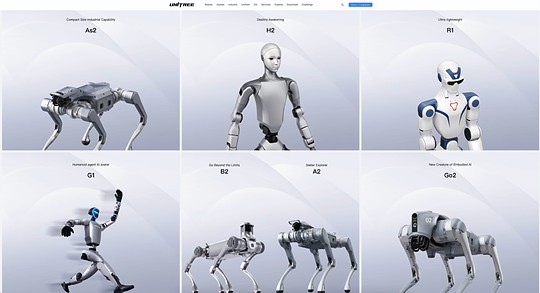
In June, Nvidia announced a partnership with Unitree to build a research robot. Unitree supplies the mechanical body. Nvidia supplies the digital brain.
That relationship offers a remarkably simple way of understanding what's happening.
The AI revolution is beginning to acquire a body.
If you've seen Unitree before, there's a decent chance it was on social media.
Its robots have become internet sensations by running, backflipping, scaling walls and performing elaborate kung fu routines.
They're extraordinary demonstrations of how quickly the technology has advanced.
 Source: Unitree Robotics
But doing a backflip doesn't necessarily create a viable business.
That's why the numbers behind Unitree are more interesting to me than the videos.
The company generated roughly $250 million in revenue last year. Sales more than quadrupled, and unlike many emerging technology companies, Unitree is already profitable.
More importantly, China is moving aggressively toward production at scale.
According to research firm Omdia, Chinese manufacturers shipped roughly 18,500 humanoid robots during the first half of 2026. American companies shipped about 4,000.
That's more than a four-to-one advantage.
Unitree's products already range from less than $5,000 to more than $150,000, spanning industrial, educational and consumer markets.
Much of today's commercial activity still consists of pilot programs and research projects, and fully autonomous teams of humanoids working across factories remain years away.
But the nature of the challenge is changing.
For decades, the question was whether anyone could build robots capable of moving and operating like people.
The question now is whether companies can build enough of them, cheaply enough, to put them to work.
The Race to Build Millions of Them
China isn't alone in thinking about scale.
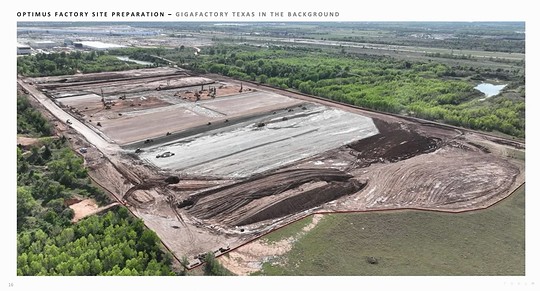
Tesla is building dedicated manufacturing capacity at its massive Giga Texas complex for Optimus, its humanoid robot.
Elon Musk has said Tesla eventually aims to produce as many as one million Optimus robots annually.
 Source: Tesla
There are plenty of reasons to be skeptical of that timetable, but the precise forecast isn't the point.
By building dedicated manufacturing infrastructure, Tesla is putting physical capital behind the belief that humanoid robots can eventually be manufactured at enormous scale.
Meanwhile, Unitree competes with Chinese companies including Agibot and UBTech and American developers including Figure AI, Agility Robotics and Apptronik.
Moreover, Hyundai-owned Boston Dynamics has spent decades developing some of the world's most sophisticated robots.
This isn't simply a technology race anymore. It's becoming an industrial one.
I've seen versions of this progression before.
Transformative technologies typically begin expensive, with uncertain commercial applications and few obvious investment opportunities.
Then costs fall, manufacturing improves, infrastructure gets built, and capital begins pouring in.
It happened with automobiles, semiconductors, personal computers, and the internet. More recently, we've watched it happen with AI.
That's why I don't think I need to predict today whether Unitree, Tesla, Figure, Boston Dynamics or somebody I've barely heard of will eventually dominate humanoid robotics.
What's more important is recognizing when the underlying environment begins to change.
Several signals suggest that's happening now.
Governments certainly aren't waiting for the commercial winners to emerge.
Last month, the Federal Communications Commission announced plans to block new Chinese-made humanoid and quadruped robots from entering the U.S. market, citing national security concerns.
The concern is understandable.
Robots operating inside factories, businesses and eventually homes will contain cameras, sensors, microphones, connectivity and enormous amounts of software.
Those machines could collect extraordinarily sensitive commercial, government and personal information or potentially create new avenues for cyberattacks.
China has accused the U.S. of abusing national-security concerns and threatened retaliation.
But there's a larger industrial story here, too.
Washington has already watched China establish commanding manufacturing positions in solar panels, batteries and electric vehicles. It clearly doesn't want advanced robotics added to that list.
Think about what that means.
This is an industry whose largest commercial applications haven't even been established yet, and the world's two largest economies are already fighting over who will control it.
From Science Fiction to an Investable Theme
The long-term projections help explain some of that urgency.
Morgan Stanley estimates that the humanoid robot market could eventually exceed $5 trillion by 2050, with as many as one billion humanoids operating worldwide.
Those numbers should be treated with appropriate skepticism. Nobody can reliably predict what the robotics industry will look like nearly 25 years from now.
Fortunately, we don't need one billion robots for this to become an enormous industry.
And investors don't have to wait until 2050 to participate in the theme:
- Dedicated robotics and physical-AI ETFs are appearing and attracting investor attention.
- Unitree is entering the public markets.
- Tesla is building dedicated production capacity.
- China is already manufacturing thousands of humanoids.
- Nvidia is developing the computing platforms that can power them.
- And governments are beginning to treat robotics as strategically important technology.
That's why today's Unitree debut matters.
It isn't because I'm recommending Unitree. I'm not.
It matters because an industry that investors have spent years watching from a distance is beginning to look very different.
Robots are leaving research laboratories and entering factories. Companies are moving from prototypes toward production. Capital markets are providing new ways to finance and invest in the industry. Governments are already fighting over who gets to control it.
There will be setbacks, hype, and undoubtedly robotics companies that attract enormous amounts of money and ultimately go nowhere.
I don't know yet who the winners will be, and I don't need to pretend that I do.
What's important is recognizing what has changed.
The factories, products, public companies, and investment vehicles are beginning to arrive. Robotics and physical AI are becoming investable.
And from here, I'll be watching closely to see where this rapidly emerging industry takes us, and I'll keep you informed every step of the way.
Sign Up Today for Free!
Truth & Trends brings you market insights and trading tips you won't find anywhere else — unless you have your own personal hedge fund manager on speed dial...
Meet Enrique Abeyta, one of Wall Street’s most successful hedge fund managers. With years of experience managing billions of dollars and navigating the highs and lows of the financial markets, Enrique delivers unparalleled market insights straight to your inbox.
In Truth & Trends, Enrique shares his personal take on what’s moving the markets, revealing strategies that made him a star in the world of high finance. Whether it’s uncovering the next big trend or breaking down the hottest stocks and sectors, Enrique’s insights are sharp, actionable, and proven to work in any market condition.
Inside these daily updates, you’ll gain:
- 50 years of combined trading wisdom distilled into actionable insights.
- A behind-the-scenes look at how Wall Street pros spot opportunities and avoid pitfalls.
- Exclusive strategies that Enrique personally uses to deliver exceptional returns — no fluff, just results.
To have Truth & Trends sent directly to your inbox every weekday, just enter your email address below to join this exclusive community of informed traders.
Don’t miss your chance to learn from one of the best in the business.
Sign up now and take your trading game to the next level.

Choose Sanity: Signal Over Noise
Posted August 07, 2026
By Greg Guenthner

Signs of '99: Is This the End?
Posted August 03, 2026
By Enrique Abeyta

The Last Face You See
Posted July 31, 2026
By Greg Guenthner

Micron: Don't Tip the Raft!
Posted July 30, 2026
By Enrique Abeyta

Debunked: The Margin Debt "Crash Signal"
Posted July 27, 2026
By Enrique Abeyta
