Posted November 16, 2025

By Ian Culley
Hyper-Caffeinated Sticker Shock
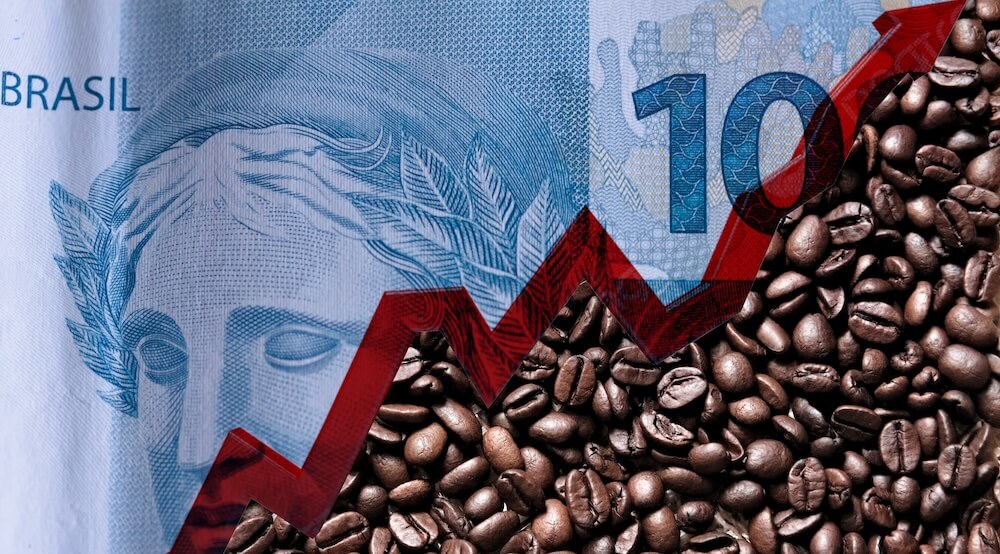
Coffee prices have risen more than any other grocery item this year.
If you’re a regular coffee drinker, that may not come as a surprise. But I hadn’t realized just how bad it’s gotten.
Earlier this week, I ran to the store to grab a bag of beans. Let’s call it a channel check.
I was shocked to find my preferred Stumptown bag cost $19.99. I couldn’t even find anything less than $14.
It’s not just at my local Fresh Market, either.
The Bureau of Labor Statistics estimates the price of coffee beans has shot up 22% since August last year.
Compare that to all other groceries, which have risen a mere 2.7% over the same period.
Treasury Secretary Scott Bessent even chimed in this week and promised to take action to reduce the price of coffee, along with other grocery items.
Despite Washington's best efforts, I wouldn't count on prices coming down anytime soon. Here’s why — and what you and I can do about it.
The Perfect Storm for a Coffee Spike
First, let’s look at why coffee prices have been climbing higher than other areas of the supermarket.
The general consensus is that three fundamental factors are creating the perfect storm for the coffee market: tariffs, depleted inventories, and Brazil’s years-long drought.
Trump’s tariffs and his retaliatory tax against Brazil for the indictment of former president Jair Bolsonaro are undoubtedly impacting the market.
According to the WSJ, importers are currently bumping the price of green coffee beans (beans before they are roasted) by 10% to 20%.
They’ve also alerted mom-and-pop shops that future increases could run up to 40% to 50%, depending on tariffs.
The Supreme Court will eventually hand down its opinion regarding the legality of Trump’s tariffs. But even a ruling against them may not put the brakes on rising coffee prices.
Suitable land for coffee cultivation is shrinking, and drought across South America is making it next to impossible to replenish reserves.
No doubt a reduction or elimination of import taxes on countries such as Brazil will offer a welcome reprieve. However, it will likely have little to no effect over the long run.
In reality, inflation has driven coffee prices higher for years, well before tariffs hit the global economy.
Coffee futures (contracts for future delivery of physical beans) have tripled since October 2023. That’s what commodities do during an inflationary regime. Back in the 1970s, coffee rallied 630%.
At the end of last year, the futures contract broke out of a 47-year base, surpassing the 1977 peak. Prices have remained elevated since.
The higher costs have compelled many importers to buy less coffee, further constraining an already tight supply.
Fast forward to today, and I have a feeling coffee will kick off the next leg of its historic run in the coming weeks.
So what’s a coffee drinker to do? Our options may be limited, but I do have a couple of quick ideas.
What You And I Can Do About It
Grabbing a cup of Java on the go is always more expensive than preparing one at home. That’s not breaking news.
Still, many of my friends and family (myself included) have been skipping the drive-thru for a pick-me-up.
I’m also not opposed to drinking cheap coffee. In fact, I enjoy Café Bustelo, and I’ll probably start drinking it more regularly.
Because, like it or not, you and I will live with increasing coffee costs until the critical forces underpinning the market ease.
But cutting back or trading down aren’t our only choices.
On the investing side, the Agriculture ETF (DBA) is the closest you’ll get to a pure-play coffee ETF in the market, although it also holds futures contracts of other commodities. Regardless, DBA will certainly rally as coffee futures ramp to record highs.
But you don’t need to trade coffee directly. Stock indexes worldwide are posting record highs.
The Japan Nikkei 225, German DAX, and even the Peru stock market, for instance, are up more than 30% since this time last year, respectively. In fact, the iShares MSCIPeru ETF (EPU) has gained 55% year-over-year.
That’s growth that can keep you ahead of inflation.
Sure, stocks hit a rough patch this week, but they will advance during this inflationary cycle.
And if you focus on buying what’s working, you can easily outpace rising costs in the grocery store.
Sign Up Today for Free!
Truth & Trends brings you market insights and trading tips you won't find anywhere else — unless you have your own personal hedge fund manager on speed dial...
Meet Enrique Abeyta, one of Wall Street’s most successful hedge fund managers. With years of experience managing billions of dollars and navigating the highs and lows of the financial markets, Enrique delivers unparalleled market insights straight to your inbox.
In Truth & Trends, Enrique shares his personal take on what’s moving the markets, revealing strategies that made him a star in the world of high finance. Whether it’s uncovering the next big trend or breaking down the hottest stocks and sectors, Enrique’s insights are sharp, actionable, and proven to work in any market condition.
Inside these daily updates, you’ll gain:
- 50 years of combined trading wisdom distilled into actionable insights.
- A behind-the-scenes look at how Wall Street pros spot opportunities and avoid pitfalls.
- Exclusive strategies that Enrique personally uses to deliver exceptional returns — no fluff, just results.
To have Truth & Trends sent directly to your inbox every weekday, just enter your email address below to join this exclusive community of informed traders.
Don’t miss your chance to learn from one of the best in the business.
Sign up now and take your trading game to the next level.
Thankful for the Greatest Game on Earth
Posted November 27, 2025
By Enrique Abeyta

The Art of the Stop Loss
Posted November 25, 2025
By Ian Culley

A “Blue Owl” in the Coal Mine
Posted November 24, 2025
By Enrique Abeyta
![[VIDEO] How to Spot a Bounce Worth Buying](http://images.ctfassets.net/vha3zb1lo47k/52knC5jBCw9jj5rBVAQMRs/9213f9d92a2262a0ec1b42df9a62678d/ttr-issue-11-21-25-img-post-2.jpg)
[VIDEO] How to Spot a Bounce Worth Buying
Posted November 21, 2025
By Greg Guenthner

Stock Got You Down? Do This
Posted November 20, 2025
By Enrique Abeyta
