
Posted April 02, 2026

By Enrique Abeyta
Embrace the Divine to Improve Your Trading
It’s the week of Easter and Passover, so many of us will be spending the next few days with family and friends.
The U.S. stock market will also be closed tomorrow in honor of Good Friday, a welcome respite from recent Truth Social-inspired volatility!
Over the long weekend, I’m digging into the next book on my “to read” pile.
It’s called “The Meaning of Your Life: Finding Purpose in an Age of Emptiness” by the Harvard professor, social scientist, and bestselling author Arthur Brooks.
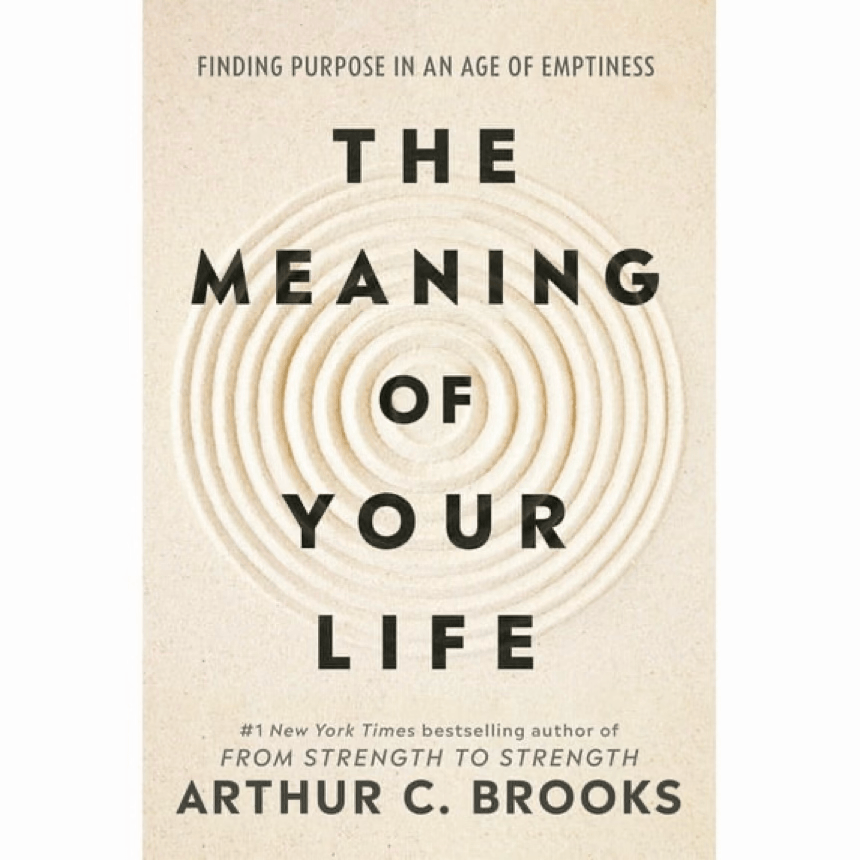
For me to be excited about a book from a Harvard professor says a lot! I would ordinarily go out of my way to avoid such a thing.
But Brooks is different.
He began his career as a classical musician before entering academia with a focus on social science, specifically the study of what makes people happy.
Social science is the research of human behavior using many different disciplines, including history, philosophy, sociology, and biology.
This is called a “multi-disciplinary” approach.
It’s the same approach I take when thinking about trading and investing.
I want to use every possible science and study out there to figure out how to make you a better trader.
The Key to Happiness (and Making More Money)
With this new book out and the religious focus of this long weekend, a quote I recently read from Brooks stood out.
“You have to reach for the divine because you have to override your natural animal tendencies so you can become the person that you’re supposed to be – truly lifting yourself and other people up and not becoming a victim of your resentment.”
The goal in Brooks’ quote is happiness. But you could easily substitute the word “trader” for “person” and apply it to the market.
When Brooks says the “divine,” he is not necessarily referring to a belief in G-d.
Brooks points out that the left hemisphere of the brain handles “how-to” tasks. This is what we would consider “logic” and is where our modern brains live much of the time.
The right hemisphere of the brain handles the “why” questions. Questions of meaning, purpose, and love.
In modern society — and especially with the influence of social media — we spend most of our time on the right side of the brain.
This doesn’t mean that the left side isn’t active. It just means that it isn’t given the proper attention.
This disconnect is what contributes to the unhappiness of so many in modern society.
As Brooks says, we prioritize productivity over purpose.
This is an incredible insight. And Brooks has some actionable ideas to bridge this gap for modern humans.
I highly encourage you to check out his work and buy the book.
For our purposes, though, I am focused on making you a better trader. I want to teach you how to make more money in the markets.
The disconnect that Brooks highlights as driving unhappiness is the same disconnect that frustrates so many traders.
Our trading strategies are driven by that “how-to” right hemisphere of the brain. We create a well-researched and logical plan on how to be successful.
The problem is that we too often ignore the impact of the left hemisphere of our brain, the half driven by emotion, or that we often call the “animal” side.
Then what often happens is we walk away from our plan when we are faced with a biological reaction.
This could be ignoring a planned stop loss discipline when we are losing big.
It could be adding to a position that’s deeply overbought when we should be profit-taking instead.
For most of us, this isn’t an occasional occurrence. It’s the majority of the time.
Our bodies are literally hard-wired to make us poor traders.
My view embraces Brooks' idea. We must embrace and understand the left hemisphere (or emotional side) of our brain to become great traders.
Brooks refers to it as the “divine.” The less religiously inclined might view it as our “emotional” brain instead.
If we don’t find a way to satisfy it when trading, we are likely to react to it and ignore our well-crafted plan for success.
This is why I always emphasize the importance of understanding your emotions when I talk about trading.
It’s only when you accept that you’re fallible and likely to give in to emotions that you can successfully create a plan to overcome them in trading.
You need to satisfy that side of your brain, not ignore it, to be a more successful trader.
It turns out that achieving happiness in life has a lot in common with achieving success in the markets.
Embrace the “divine” in your brain to accomplish our favorite saying about trading success…
Plan the trade, trade the plan.
Sign Up Today for Free!
Truth & Trends brings you market insights and trading tips you won't find anywhere else — unless you have your own personal hedge fund manager on speed dial...
Meet Enrique Abeyta, one of Wall Street’s most successful hedge fund managers. With years of experience managing billions of dollars and navigating the highs and lows of the financial markets, Enrique delivers unparalleled market insights straight to your inbox.
In Truth & Trends, Enrique shares his personal take on what’s moving the markets, revealing strategies that made him a star in the world of high finance. Whether it’s uncovering the next big trend or breaking down the hottest stocks and sectors, Enrique’s insights are sharp, actionable, and proven to work in any market condition.
Inside these daily updates, you’ll gain:
- 50 years of combined trading wisdom distilled into actionable insights.
- A behind-the-scenes look at how Wall Street pros spot opportunities and avoid pitfalls.
- Exclusive strategies that Enrique personally uses to deliver exceptional returns — no fluff, just results.
To have Truth & Trends sent directly to your inbox every weekday, just enter your email address below to join this exclusive community of informed traders.
Don’t miss your chance to learn from one of the best in the business.
Sign up now and take your trading game to the next level.

Iran: Fast Checkmate, But Maybe No Winner
Posted March 30, 2026
By Enrique Abeyta

Welcome to the Worst Possible Market
Posted March 27, 2026
By Greg Guenthner
![[48 Hours] One Step Closer to the Iran Endgame](http://images.ctfassets.net/vha3zb1lo47k/7o9bZ7e2QPeTe7qntxzXPc/71c43dd00c51b9ab72e63f054396cac7/ttr-issue-03-26-26-img-1.jpg)
[48 Hours] One Step Closer to the Iran Endgame
Posted March 26, 2026
By Enrique Abeyta

Ghost of the 1970s Is Back — Or Is It?
Posted March 23, 2026
By Enrique Abeyta
My Ultimate Trading Challenge “Cheat Sheet”
Posted March 20, 2026
By Greg Guenthner
