![[48 Hours] One Step Closer to the Iran Endgame](http://images.ctfassets.net/vha3zb1lo47k/7o9bZ7e2QPeTe7qntxzXPc/71c43dd00c51b9ab72e63f054396cac7/ttr-issue-03-26-26-img-1.jpg)
Posted March 26, 2026

By Enrique Abeyta
[48 Hours] One Step Closer to the Iran Endgame
If you’ve been watching Trump’s press conferences on the war with Iran, you’ve probably noticed something peculiar.
The delivery can feel scattered, almost like a stream of consciousness.
But if you slow it down, listen carefully, and (most importantly) watch more than one appearance, a pattern starts to emerge.
Beneath the "word salad" lies structure. And beneath the structure lies strategy.
That strategy is far more focused and achievable than many commentators would have you believe.
Because, despite all the noise, the U.S. has been remarkably consistent about its actual objectives.
When you step back and focus on those goals, it becomes clear what the next phase — and ultimately the endgame — will look like.
Today, I want to talk to you about this next phase and why I believe it could all kick off as soon as this weekend.
Three Goals That Keep Showing Up
From the very beginning, Trump has repeatedly referenced the same core goals:
- Degrading Iran’s drone capabilities
- Neutralizing its missile infrastructure
- Eliminating any viable nuclear threat
Those three pillars have come up repeatedly, often wrapped in off-the-cuff remarks, but clearly rooted in military briefings.
If you’ve spent enough time around markets — or frankly, around decision-makers — you learn to recognize when someone is speaking from instinct rather than channeling information from experts.
In this case, it’s obvious that Trump is in constant dialogue with top military leadership.
What’s equally important is what hasn’t been emphasized.
Regime change, while occasionally mentioned, has never felt like the primary objective. It’s been framed more as a potential outcome than a requirement.
That distinction matters.
Because wars aimed at regime change tend to drag on for years. Wars aimed at degrading capabilities and reshaping incentives can end much faster.
And now, this week, we’ve seen something new.
For the first time, credible reports indicate that communication channels have opened between the U.S. and Iran, with Pakistan acting as a mediator.
Both sides have floated initial demands.
The U.S. proposal reportedly includes a detailed, multi-point framework.
Iran’s counter includes familiar themes: the removal of the U.S. military presence in the region, control over the Strait of Hormuz, and broader sovereignty concerns.
On the surface, it all looks complicated. But in reality, it’s probably much simpler than that.
What Iran and the U.S. Actually Want
Strip away the rhetoric, and each side’s core motivation becomes clear.
For Iran, despite how it is often portrayed, the behavior over the past several weeks suggests something very different from chaos or irrational escalation.
In fact, what we’ve seen looks more like controlled signaling.
There have been attacks, yes, but often targeted in ways that send a message without triggering maximum retaliation.
One example that stood out was the strike on Qatar’s LNG infrastructure. Reports indicate that only specific processing units (linked in part to Western energy interests) were affected, while the broader facility remained intact.
If the goal had been total disruption, the outcome would have looked very different.
That tells you something important.
This is not a regime acting without calculation. It’s a regime acting to survive. And that, more than anything, is the key to understanding what Iran actually wants.
They want to remain in power. They want relief from economic pressure. And ultimately, they want to be left alone.
If their objective were outright regional destruction, they’ve had ample opportunity to pursue it more aggressively.
They haven’t.
Instead, they’ve walked a line, aggressive enough to maintain leverage, but measured enough to avoid existential retaliation.
Now look at the U.S. side. Again, if you read between the lines of recent statements, a plan is starting to take shape.
Even as calls for a ceasefire have been floated publicly, military positioning tells a different story.
U.S. forces are moving rapidly into the region. Reports suggest that an expeditionary force could soon be in position to control the Strait of Hormuz effectively.
Meanwhile, an international coalition is forming, with naval and military assets from dozens of allied nations preparing to secure key shipping lanes.
It’s important to understand why those allies are participating.
This is not about loyalty to the United States. It’s about self-preservation.
A Fight for the Strait That Runs the World
The Strait of Hormuz is the world's single most important energy chokepoint.
Roughly 20% of global oil supply flows through that narrow passage, along with massive volumes of liquefied natural gas, fertilizers, and other critical commodities.
The recent disruptions have already sent shockwaves through global markets.
Europe is staring down potential fuel shortages within weeks. Asian economies are feeling the strain. Insurance costs for shipping have surged.
Even partial disruptions, tankers hesitating, routes slowing, and cargo being selectively allowed through have been enough to drive significant price volatility.
And here’s the part many people miss: there is no real workaround.
Despite what some headlines suggest, alternative pipelines and routes simply do not have the capacity to replace Hormuz.
The global energy system is not a flexible network; it’s a funnel. And that funnel runs through one narrow stretch of water.
Which brings me back to the strategy.
If you step back and connect the dots, two likely moves emerge.
First, the U.S. and its allies will move to secure the Strait of Hormuz through an overwhelming projection of military power. This is not without precedent.
In the late 1980s, during the Iran-Iraq War, the U.S. successfully escorted and protected commercial shipping through the same region. The playbook exists.

A U.S. Navy sailor scans for mines from the bow of the guided missile frigate USS Nicholas during an Operation Earnest Will convoy mission, June 1988
Second, there is a strong case to be made that the U.S. will move to neutralize Iran’s ability to leverage its own energy exports.
Specifically, this will most likely include some takeover or blockade of Kharg Island, which handles the vast majority of Iran’s oil shipments.
Cutting off that outlet would dramatically reduce Iran’s economic leverage while increasing pressure to negotiate.
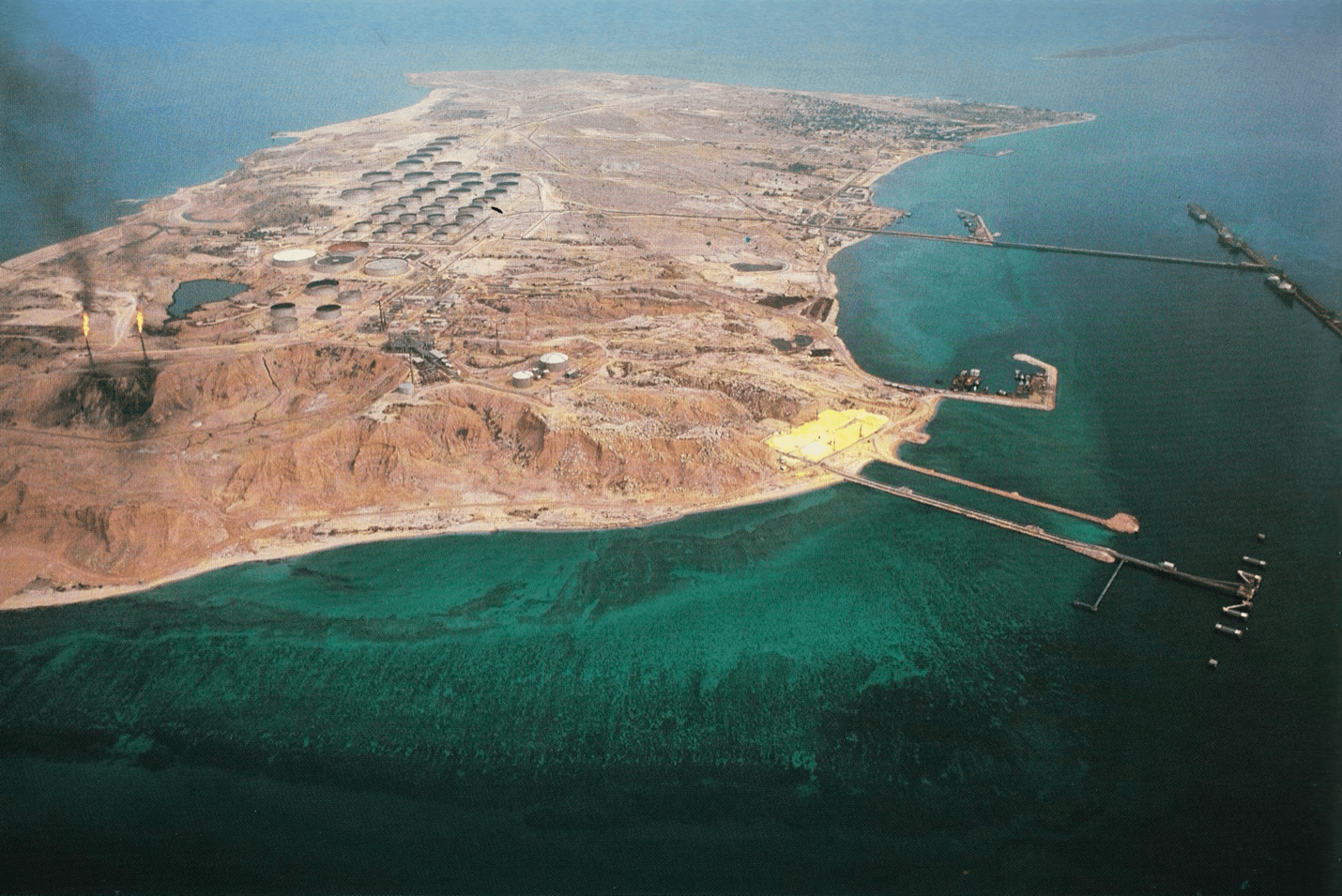
Kharg Island, Iran
According to multiple senior U.S. officials, the Pentagon and U.S. Central Command are actively developing plans for a “finishing blow” against Iran.
The options under consideration align closely with the strategic framework I’ve outlined above.
I believe these moves could happen as soon as THIS WEEKEND — or possibly the following one, which marks five weeks of the conflict.
The execution is likely to follow a very specific order.
First, Iran’s export capacity would be constrained at the source, most likely through a blockade of Kharg Island.
This could be done in a way that avoids direct damage to infrastructure, preserving optionality while immediately reducing Iran’s leverage.
At the same time, U.S. and allied forces would likely move to neutralize Iran’s operational foothold inside the Strait itself — particularly around key positions like Larak Island and Abu Musa, which anchor its ability to disrupt shipping.
Finally, control of the Strait would be enforced directly, restricting Iranian traffic while ensuring the continued flow of global energy supply.
Once these objectives are achieved — control of the Strait and constraint of Iran’s export capacity — the negotiating dynamic changes entirely.
At that point, the U.S. isn’t negotiating from a position of urgency. It’s negotiating from a position of strength.
And that’s when things tend to move quickly.
What Happens After This Next Phase
If this framework plays out as I predict, Iran's endgame is likely to include some combination of sanctions relief, access to frozen assets, and, most importantly, regime survival.
For the U.S. and its allies, the primary objective will be to restore the free flow of global energy and avoid the cascading economic consequences of a prolonged disruption.
For investors, this is where it gets interesting.
Markets are currently pricing in uncertainty.
They are reacting to headlines, volatility, and the very real risk of escalation. But markets also have a history of snapping back quickly once clarity emerges.
If the Strait is secured and negotiations progress, the setup for a sharp, V-shaped recovery is very real.
We’ve seen similar dynamics before, most recently in the rapid rebound following the tariff-driven selloff in April of last year.
That doesn’t mean the path will be smooth. Far from it.
Securing one of the world's most strategically contested waterways is not a trivial task.
There will be risks. There may be further escalation. And unfortunately, there will almost certainly be more bloodshed before this is resolved.
But when you step back and look at the incentives on both sides, the direction becomes clearer.
The U.S. wants stability in global energy markets and the neutralization of key military threats.
Iran wants survival.
Those objectives, while seemingly opposed, are not mutually exclusive.
Which is why, despite how chaotic things may feel in the moment, there is a growing case to be made that we are closer to the end of this conflict than the beginning.
Not months from now. Weeks.
And if that’s true, the market implications could be just as significant as the geopolitical ones.
Sign Up Today for Free!
Truth & Trends brings you market insights and trading tips you won't find anywhere else — unless you have your own personal hedge fund manager on speed dial...
Meet Enrique Abeyta, one of Wall Street’s most successful hedge fund managers. With years of experience managing billions of dollars and navigating the highs and lows of the financial markets, Enrique delivers unparalleled market insights straight to your inbox.
In Truth & Trends, Enrique shares his personal take on what’s moving the markets, revealing strategies that made him a star in the world of high finance. Whether it’s uncovering the next big trend or breaking down the hottest stocks and sectors, Enrique’s insights are sharp, actionable, and proven to work in any market condition.
Inside these daily updates, you’ll gain:
- 50 years of combined trading wisdom distilled into actionable insights.
- A behind-the-scenes look at how Wall Street pros spot opportunities and avoid pitfalls.
- Exclusive strategies that Enrique personally uses to deliver exceptional returns — no fluff, just results.
To have Truth & Trends sent directly to your inbox every weekday, just enter your email address below to join this exclusive community of informed traders.
Don’t miss your chance to learn from one of the best in the business.
Sign up now and take your trading game to the next level.
My Tesla Calls Went to Zero... Just as I Planned
Posted July 10, 2026
By Greg Guenthner

Mark Twain Was Right About Your Newsfeed
Posted July 09, 2026
By Enrique Abeyta

Six Months In: My 2026 Report Card
Posted July 06, 2026
By Enrique Abeyta

The S-E-T System for Finding Breakout Stocks
Posted July 03, 2026
By Greg Guenthner

6,019 Reasons to Be a Proud American
Posted July 02, 2026
By Enrique Abeyta
